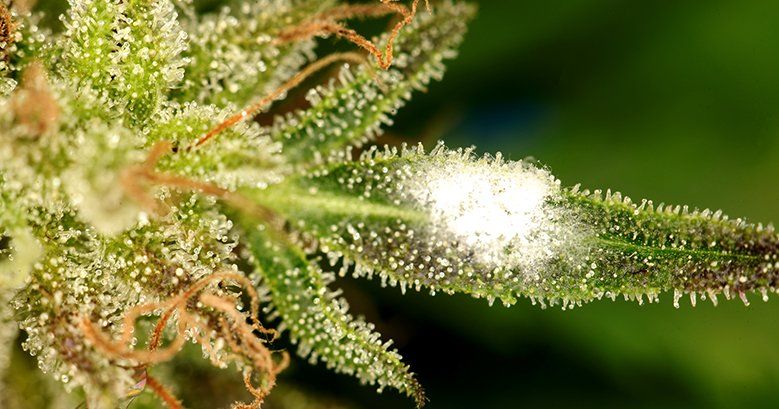

Lesser known cannabinoids and terpenes may be helpful for patients. Here the author shows why, and how patients can choose more effective medical cannabis products.
Lesser known cannabinoids and terpenes may be helpful for patients. Here the author shows why, and how patients can choose more effective medical cannabis products.
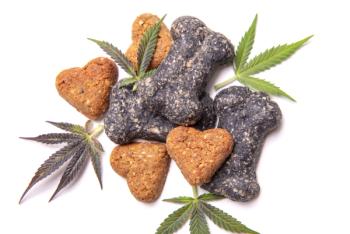
Here we review the current and pertinent literature in utilizing cannabis derivatives in animals and discuss the future forecast of cannabis in veterinary medicine.

The cannabis industry is constrained by the continued use of acronyms and nonstandard abbreviations for strain naming in lieu of a scientific-based standardized classification convention or lexicon. Applying chemometric tools can result in not only the authentication of a given cannabis cultivar but also provide a quality control mechanism for both cannabis flower and any resulting cannabis-based drugs.
In this installment of “Cannabis Crossroads,” we take a closer look at the hemp revolution, and more specifically, academic hemp research.

Canadian MS Society Invests $1.5 Million in Cannabis Research

In honor of National Women’s Month, Josh Crossney highlights some of the amazing women that will be speaking at the first Cannabis Science Conference East show.
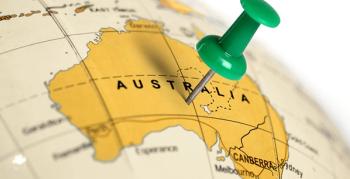
Here we take a closer look at Australia’s medical cannabis program, the laws surrounding it, and speak to Australian pharmacist Paul Mavor.
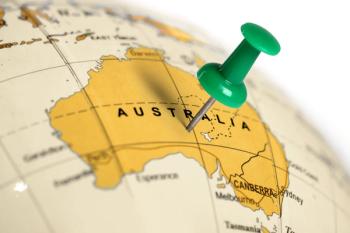
Here we take a closer look at Australia’s medical cannabis program, the laws surrounding it, and speak to Australian pharmacist Paul Mavor.
Dr. Ethan Russo, Director of Research and Development for the International Cannabis and Cannabinoids Institute (ICCI), recently spoke with us about some of his recent research efforts, cannabis dosing, and his continued push to change the stigma against cannabis as a medicine.
Paul Mavor, an Australian and UK licensed pharmacist and the CEO and Founder of Health House International, recently spoke to us about Australia’s medical cannabis program, the testing and regulations in place, and the future outlook for cannabis in his country.
Josh Blacher, Chief Business Officer at InMed Pharmaceuticals, recently spoke to us about the groundbreaking researching his company is doing using biosynthesis to create cannabinoid-based pharmaceutical products.
Professor Jack Henion shares his insights on cannabis research, including challenges and opportunities in moving cannabis science forward.
Front Range Biosciences (FRB), a leading agricultural biotech company specializing in tissue culture propagation of high value crops, announced in a press release on October 4, 2018 (1), that it has completed a $10 million Series A round of financing for cannabis research.
We recently spoke to Kevin McKernan, the CSO and Founder of Medicinal Genomics, and Doug Kennedy, the CannMed 2018 Conference Director, about their start in the cannabis industry and what to expect from this year’s CannMed conference.
Highlights from the 2018 Cannabis Science Conference
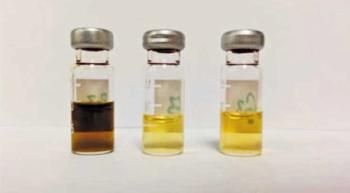
The method described here allows for the simultaneous analysis of 47 pesticides and five mycotoxins in cannabis in one simple QuEChERS procedure. This simple method is designed for implementation in start-up laboratories and in established laboratories that wish to streamline their sample preparation process, decrease solvent usage, and obtain accurate and fast results.

An investigation of C18 and phenyl-hexyl column chemistries for definitive identification of 13 synthetic cannabinoid metabolites in patient samples.

The wide dynamic range of ICP-MS allows it to be used for the simultaneous determination of parts-per-billion levels of heavy metals including lead, arsenic, cadmium, and mercury, together with high parts-per-million levels of nutritional elements, such as phosphorus, calcium, potassium, and magnesium.
Other techniques for monitoring cannabinoids, such as GC–MS and LC–MS, are limited to screening known species and are therefore always one step behind the designer drug market-where new, previously unknown variations of analogs of cannabinoids are constantly being synthesized. The method presented here addresses this problem by providing accurate masses for all detected species, thus allowing postanalysis identification of initially untargeted compounds.
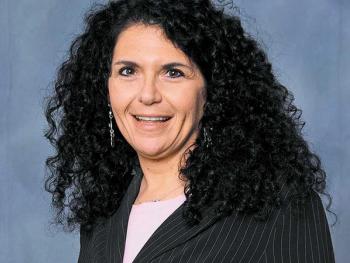
An interview with Sue Sisley
Efficient synthesis of complex cannabinoids is possible while avoiding marijuana cultivation.