
Recently, researchers performed a study which discovered that a cannabis plant compound inhibited COVID-19 infection in human lung cells.

Recently, researchers performed a study which discovered that a cannabis plant compound inhibited COVID-19 infection in human lung cells.

The 5-part program will dive deep into cultivation, extraction, processing, testing, third-party certifications, and more.
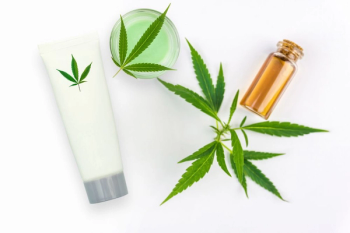
CBD is a growing industry. In this article, topicals and their growing popularity are discussed.
The Dental College of Georgia (DCG) and the Medical College of Georgia, recently performed a study which produced results showing that cannabidiol (CBD), a non-psychoactive cannabinoid found in cannabis, reduces damage in the lungs spurred by cytokine storms caused by coronavirus (COVID-19).
Dr. Junella Chin, the Founder of MedLeaf RX and the Chief Medical Advisor for Yesterday Wellness, discusses with us the beneficial aspects CBD and how the medical field is beginning to incorporate the concept of medical cannabis into patient treatments.
Op-ed on a new study related to how cannabidiol (CBD) exerts its clinical efficacy.
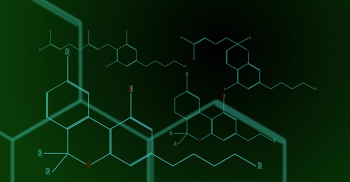
A closer look at some of the current in vitro evidence suggesting that cannabinoids possess potent activity against a range of gram-positive bacteria.
The U.S. Food and Drug Administration (FDA) recently released a draft guidance on developing cannabis-based drugs. These guidelines come weeks after the White House announced it had completed reviewing the draft guidance.
A tribute piece to Charlotte Figi, a medical cannabis and CBD pioneer who inspired the name of the medical cannabis strain Charlotte’s Web.
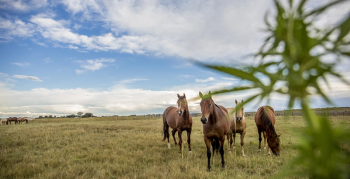
Currently, little information exists on the calming and painkilling effects on animals using cannabidiol (CBD). Dr. Kimberly Guay, an Associate Professor at Tarleton State University in Stephenville, Texas, is hoping to change that by conducting research on the effects of CBD in horses and other livestock.
Dr. Sang-Hyuck Park discusses his research and what we can expect from his talk “Inhibitory Effects of Cannabidiol (CBD) on the Growth and Development of Tobacco Hornworm Manduca sexta” during the Spring 2020 CANN Virtual Symposium in The Second Annual ElSohly Award session on Wednesday, May 6.
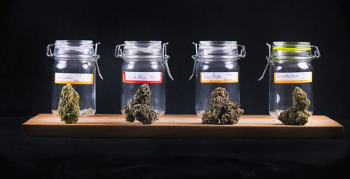
A large data set from Washington (140,000 flower samples) is scrutinized here for evidence of consistently propagated strains with higher than a 2-to-1 ratio.
Commentary on how medicinal cannabis can evolve in a similar manner as the pharmaceutical industry did.
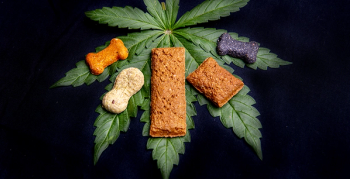
In this study, six different brands of CBD oil pet supplements were obtained and untargeted analyses using gas phase-time of flight mass spectrometry were performed.
Aryn Sieber, the founder and CEO of CBD Essentials and Cannaisseur Brands as well as the founder of CannaCauses Foundation, discusses his experiences as a 9/11 first responder, his battle with stage IV cancer, and how cannabis impacted his life.
GW Pharmaceuticals recently announced the company’s financial results from the second quarter of 2019.

Where does cannabidiol’s (CBD) legal status stand following the 2018 Farm Bill? One attorney looks at common misperceptions.
Compact mass spectrometry, in combination with suitable sample introduction techniques-such as the atmospheric solids analysis probe, thin-layer chromatography, and classical liquid chromatography techniques-can be used effectively for the detection and quantification of cannabinoids and pesticides in cannabis-related material and contraband.
QuEChERS is introduced to the discipline of forensic testing as a viable method for the extraction of pesticides and cannabinoids in various complex sample matrices
Other techniques for monitoring cannabinoids, such as GC–MS and LC–MS, are limited to screening known species and are therefore always one step behind the designer drug market-where new, previously unknown variations of analogs of cannabinoids are constantly being synthesized. The method presented here addresses this problem by providing accurate masses for all detected species, thus allowing postanalysis identification of initially untargeted compounds.
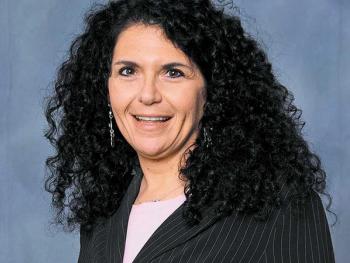
An interview with Sue Sisley
An interview with Uma Dhanabalan
An interview with Jeffrey C. Raber