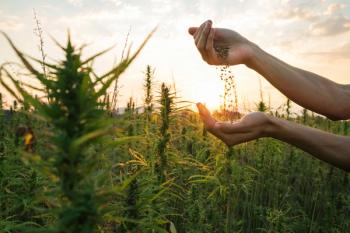

Zacariah Hildenbrand, PhD and Adam Jacques discuss how cannabis genetics affect cannabinoids.
The research compared two medical cultivars grown using precision water stress, demonstrating a potential for a genetic tolerance for salinity.
How could precision water stress (“crop steering”) affect the size of cannabis crops and quality along with the flower yield in different cultivars? Researchers in a recently published study tested precision water stress through osmotic stress treatments on two different Cannabis sativa cultivars to examine the effect on plant height and flower yield (1). Similar studies have previously been done on crops such as corn, soybeans, and sunflowers, though with differing results. In previous studies in cannabis, the yield and growth responses of Cannabis under various stress conditions has been variable, the study notes, suggesting the existence of a threshold for stress on yield and growth. “
Elevated salinity was tested on two different medical cultivars, Trump and Cherry, which were chosen because of their commercial importance. Three groups were used in the experiment, and each group contained six replicate plants. One group was watered using a constant nutrient solution concentration of 4 mS cm− 1 (the control group), and a second group used 8 mS cm− 1 (the higher osmotic stress treatment). The hybrid group was watered with 8 mS cm− 1 for the first four weeks (when stem growth occurs), then with 4 mS cm− 1 for the next four weeks (to reduce effect on flower yield). Height, yield, harvest index, and cannabinoid content were the main measurements of the experiment.
The cuttings were propagated and grown in stone wool blocks to isolate the effects of osmotic stress. This medium was also chosen due to its use in commercial growing. LED lighting was used and plant height was measured three times per week. Once harvested at eight weeks, stems, leaves, and flowers were separated and dried for two days.
The study also noted that various types of salts and nutrients can be used for salinity, which is measured by using electrical conductivity (EC) (dissolved ions in the solution).
Additionally, cannabinoid concentration (CBD and THC) was not affected in either of the cultivars and the THC/CBD ratio was not significantly different among the treatments. No significant differences were seen between the nutrient concentrations in the leaves or flowers in the treatments and cultivars, demonstrating that the effects on growth were due to osmotic stress and not lack of nutrients.
Ultimately, the results indicate that it is difficult to reduce plant size without also reducing flower yield, the researchers explained. “These findings confirm that Cannabis sativa is highly tolerant to osmotic stress and indicate that osmotic stress during vegetative growth can reduce plant height and increase harvest index,” the researchers concluded.
Future studies should focus on the timing of osmotic stress in order to maintain the height control while also decreasing loss of yield. There is also potential for genetic selection of salinity tolerance, the researchers noted, as evidenced by the yield seen in the Trump cultivar.
Reference