Go More In-Depth on Cannabis Genetics
Watch clips from this interivew:
Cannabis Science and Technology
Cannabis genetics fundamentally dictate the plant's potential for chemical signatures, including cannabinoid and terpene profiles, and physical traits, such as yield. Cultivators use selective techniques, such as "stacking," to enhance specific compounds. Ultimately, successful cultivation involves balancing superior genetics with environmental "levers" to optimize gene expression and create targeted strains.
Cannabis genetics fundamentally dictate the plant's potential for chemical signatures, including cannabinoid and terpene profiles, and physical traits,
such as yield. Cultivators use selective techniques, such as "stacking," to
enhance specific compounds. Ultimately, successful cultivation involves
balancing superior genetics with environmental "levers" to optimize gene expression and create targeted strains.
All living organisms consist of genetic material. This is no different for the cannabis plant. Every plant is comprised of their own genetic variations of genotype and phenotype (1). The expression of one’s genes is known as a genotype. A phenotype is how those genes are then expressed in the overall organism. With regard to the cannabis plant, the genetic makeup of the organism creates an important foundation that can affect the chemical signature of the plant, such as the cannabinoid and terpene profiles. Breeding of the plant can be tricky as you try to fine tune the phytochemical profile and can be altered through environmental factors.
Watch clips from this interivew:
“When you're dealing with plants, when you breed mom and dad together, every seed that comes out of that genetically, is going to be different in some way, microscopically or greatly different. They're going to show parts from their genetic history of the plant,” said Adam Jacques, Geneticist and Cultivator of Big Earth Consulting.
In a cannabis crop, cannabis genetics play a significant role in the crop yield. In terms of genetic breeding, its similar to turning on a bunch of levers. These levers determine yield and plant weight, cannabinoid profiles, phytochemical profiles, environmental adaptability, flowering time, and more.
Jacques has experience in cross breeding Cannabis ruderalis strains to produce a plant that has a large amount of vegetative matter that is additionally, efficacious, having the ability to produce a desired result. One such strain is called Cattail Grape. This strain variety has the ability to finish growing within 10 weeks from seed and produce a crop.
Zacariah Hildenbrand, PhD, partner of Medusa Analytical, LLC explained how, “Genetics play an enormous role in yield of a crop, and that's where we get kind of these designer strains for specific applications, where you grow a strain for finished flower and a concentrate. You can actually tailor the plant to make it for one particular thing, so you can squeeze as much for that application.”
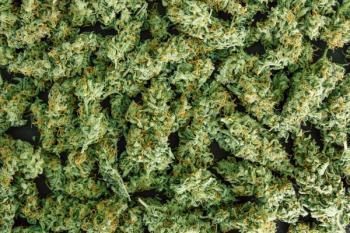
In the cannabis industry, weight is real estate. That is what the industry is looking for when it comes to cannabis crops. Therefore, weight is another important genetic factor in breeding. “Generally, in the cannabis sector, type one specifically, and sometimes seen in type three, weight of the bud is very important. So above all else, what you have to look at when you're breeding for weight is, ‘where does this plant come from in the world, what is the landrace of this plant?’ explained Jacques. “Density of buds and size of buds differ based on location in the world. If some place is very humid and very hot, the buds are going to grow airy and long and big. So, they're going to look big, but they're going to be light in weight, because they need airflow, so they don't get mold. If you look at high mountain strains and cold environments, such as Pakistan, you're going to start seeing more dense buds that are spear shaped and carry a lot of weight to them. If we're talking about weight per how much room do we have to grow, you would probably want to stick with the genetics that that lead themselves more to a cold weather, high altitude climate.”
In the retail space, processors and retail establishments can be very nitpicky over the morphology and the structure of the buds so that they can knock down pricing because they only want a certain density, Hildenbrand added. This approach can be ignorant, and does not actually reflect the quality of the product. “Everyone wants these super dense nubs that are trimmed like Christmas trees,” Hildenbrand explained. “Where you could have an incredible flower material that has an unbelievably robust phytochemical profile of terpenes, cannabinoids, flavonoids, but if it has the wrong morphological structure and it's 'larpy,' then now this is a mid-product. And so, it's kind of ridiculous to think of it this way. A lot of people are making these uninformed decisions as a way to discriminate against things that they don't fully understand.”
In deli style, which is a type of shopping where the consumer is able to both smell and view the cannabis flower bud (2), consumers pay by weight. For cultivators, this means that if you are growing plants to have 30% tetrahydrocannabinol (THC), you will need to have 30% by weight. This creates a demand for very thick, big buds. While this can be achieved, cultivating for density alone does not necessarily lead to high quality product. “Once you start pushing [the cannabis plant] with things such as bone meal or plant growth regulators (PGRs) or sugars, to increase the weight through density, not through anything else, just increasing the plant weight density, all you're really doing is stacking plant material. It’s not like it's growing extra trichomes. So, a lot of that stuff does lead to an inferior product in that way, because your real estate of weight is now being used up in stacked plant material.”
When it comes to producing a cannabis crop, there are a few important components to consider (3):
When it comes to soil, for example, cannabis is super effective at phytoremediation, which is when a plant absorbs whatever is in the soil into its plant tissues, such as heavy metals and minerals. If the soil is laden with arsenic, lead, or other additives, there’s a risk that these elements can migrate into your plant tissue and provide a negative impact on the quality of the plant.
A study called “PFOA and PFOS accumulation induces genotoxic damage and proteomic alterations in Cannabis sativa shoots”, which is scheduled to be published in January 2026 in the Journal of Hazardous Materials, explores how the Cannabis sativa L. plant, namely industrial hemp, reacts to Perfluorooctanoic acid (PFOA) and perfluorooctanesulfonic acid (PFOS) exposure. Researchers found that the above-ground biomass and chlorophyll content in the plant experienced an increase from exposure to PFOAs. When introduced to PFOAs and PFOS, antioxidant enzymes activity was inhibited (4). Accumulation of per- and polyfluoroalkyl substances (PFAS), showed the DNA integrity of the plant was compromised and caused oxidative damage.
“Exposure to the two PFAAs also resulted in the disruption of specific biological processes. While PFOS accumulation decreased the abundance of proteins directly involved in gluconeogenesis, PFOA exposure promoted the synthesis of proteins involved in chlorophyll biosynthesis, suggesting that the two compounds may interact with different molecular targets,” researchers concluded (4). “In the case of PFOA, the observed increase in biomass and chlorophyll content in the presence of genotoxic damage could represent an over compensatory growth response triggered by deregulation of cellular homeostasis, although the molecular basis underlying this response remains to be elucidated.”
Cannabinoid Profiles
A recent project Hildenbrand and Jacques worked on involved ancillary cannabinoids. One of those cannabinoids involved was with tetrahydrocannabivarin (THCV), a cannabinoid with potential benefits in the treatments for metabolic syndrome or diabetes (5). With this project, the group were able to select and cross plants to increase the concentration of THCV and other ancillary cannabinoids.
One of the cannabis strains in Jacques' genetic library arsenal has a very high concentration of cannabichromene (CBC), a cannabinoid that may be helpful with neuroprotection for conditions such as Alzheimer’s disease. Cannabis plants may have only 1% of the cannabinoid in their profile. Jacques utilized a repetitive and selective breeding process called “stacking” to continue increasing the amount of CBC. “We would start looking at plant material early in its growth, fifth, the seventh node, that's when we start seeing mature leaves. And we would start doing pretesting on them, looking for a spike in the CBC point. It was tough, it appeared that degradation happens much later on in the plant. So, we weren't able to identify the CBC content until it reached finished flower, for us to get an idea of where the percentages were at,” Jacques explained. During the project, they would keep clones of everything they grew and take their seeds. From there, they would test and when one clone tested a little bit higher than the others, they would move forward with the cultivation of that clone. For three years, this process was repeated over and over again. At the conclusion of the project, the team was able to increase the concentration of CBC from 0.8% to 3.2%.
Terpene Profiles
When it comes to how genetics affect the terpene profiles in a cannabis plant, you need to look at the environmental stressors and crossbreeding. Cannabis growers are able to produce desirable terpene profiles through the creation of new strains to cultivate new strains with specific aromas and effects. “When you get into poly-hybrids and breeding for those types of things, you can really mix and match the terpenes and change those elements. Generally, the smells that they're going to be putting off during different times of flowering are going to be stressors. Something in the environment is causing the plant stress, so it's putting off a signal smell to attract in either like beneficials or to detract the bugs away from the plant,” Jacques commented.
“Genetics play a major role, but we also found that the environmental factors can really play with the terpene expression based on light exposure. So, what we had found is that when you play with different spectra of light, mainly rate red light below 670 nanometers, you can really focus in on specific flavonoids and specific terpenes,” Hildenbrand added. “If you give it a more a broader spectrum of light, you're going to get more expression, but maybe in lower levels. So again, there's all these different genetic and environmental factors that you can kind of pull these levers and do unique things with the plant. And so that's the beautiful thing about this. Once you know what you want to create, you can then just go back and reverse engineer it with your genetics and your cultivation environment.”
Let There Be Light
In Cannabis Science and Technology’s July/August 2024 “Cultivation Classroom” column, Hildenbrand and co-authors Hannia Mendoza-Dickey and Robert Manes, investigated various lighting methods to increase plant canopy penetration, crop size, and enhance cannabinoid, terpene, and flavonoid production (6). In cannabis cultivation, natural sunlight is still unmatched in its ability to penetrate plant canopies effectively. For indoor cultivation, growers need to resort to other lighting technologies to encourage plant growth and production.
Maintaining high photosynthetic photo flux density (PPFD) levels were important for optimal plant growth and was essential for achieving high yields, as well as superior phytochemical content in cannabis. The column explains that with an overabundance of light, this can lead to the saturation of photoreactive plant elements, which are crucial to the plant’s growth, stress responses, and development. These elements include flavonoids, cannabinoids, terpenes, anthocyanins, chlorophyll, phytochromes, and more (6). The authors concluded that, “Managing plant canopy and environmental conditions are crucial for achieving the best results. By implementing these techniques, cultivators can overcome the limitations of indoor lighting and improve both the productivity and quality of their cannabis crops.”
Setting the stage for every plant’s output, genetics plays the foundational factor in cannabis cultivation. Genotypes and phenotypes dictate the plant organisms’ chemical signature which includes cannabinoids (For example: THCV, CBC, THC, and CBD), flavonoids, and terpene profiles (Such as: Caryophyllene, Myrcene, and Limonene). Through selective breeding with methods such as “stacking,” geneticists and cultivators are able to increase concentrations of desirable cannabinoids, terpenes, and flavonoids, along with any other traits they are seeking from the plant.
Beyond chemical content, genetics plays a significant role in crop yield and bud morphology. As the cannabis industry focuses on weight and bud density, cultivators are exploring cross planting methods to produce flower that dispensaries are interested in selling. Successful cultivation involves strategically “pulling levers” that include cultivation environment to optimize the expression of genetic potential, which can create high-value cannabis strains.
References
Madeline Colli is the Editor for Cannabis Science and Technology magazine. Direct correspondence to:
Colli, M. Manipulating Cannabis Genetics: Pulling Levers to Increase Phytochemical Composition, Cannabis Science and Technology, 2025, 8(6), 18-22.
10 months ago
What Happened in 2025 and What’s Next?10 months ago
How to Think Like an Analytical Chemist