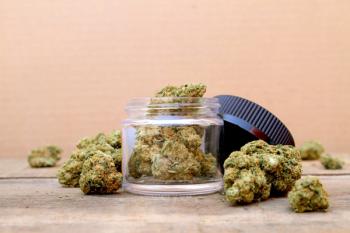

The 2025 YouGov survey data from more than 31,000 US adults show significant support for recreational cannabis legalization, medical use, and federal reclassification.
Cannabis Science and Technology
A lack of standards for cannabis vape devices puts consumers at risk, but several organizations are committed to the research, collaboration, and solutions needed to promote safety and quality in the industry.
The cannabis vaporizer market in the US is expected to grow significantly, according to Grand View Research, with an anticipated compound annual growth rate of 13.6% from 2025 to 2030 (1). Globally, the market was valued at $5.9 billion in 2024 with the US accounting for 29.6% of the global market (1,2). However, despite the continued growth, cannabis vapes still lack fundamental standards for performance and safety, such as materials, design, and performance.
One organization leading the effort to implement these crucial standards is ASTM International. Formed in 2017, the ASTM International D37 Committee on Cannabis features subcommittees that focus on standards relating to cannabis vaporizers (3). Darwin Millard serves as the chair of the ASTM D 37 Vape Device Safety and Testing Initiative, which was formed in January 2024 as a joint initiative between ASTM D37.03 on Laboratory Testing and Test Methods, and ASTM D37.08 (4). This initiative, made up of over 200 volunteers including manufacturers and consumers, was established to create collaboration between consumers and regulators of vapes, Millard explains, and to develop safety and quality standards for these devices.
Another organization advocating for consensus standards is VapeSAFER, a nonprofit prioritizing safety and quality, promoting scientific research to inform policy, and advocating for responsible and informative packaging and labelling, among other initiatives (5). The organization has also published several documents including a definition of Electronic Cannabinoid Delivery Systems (ECDS) to establish regulatory clarity, a memo on flavorant regulation to provide technical background and policy rationale, and a paper explaining how THC caps on inhalable cannabis products unintentionally harm consumers (6,7,8). Arnaud Dumas de Rauly, serves as the Chairman of VapeSAFER and ISO/TC 126/SC3.
Risk is present with cannabis vape devices across the industry and stakeholders are in a position to benefit greatly from the development and implementation of science-based standards.
While standards are present in some areas, such as the safety of batteries and the regulation of disposal, there are no laws or regulations on the safety, quality, and performance of the devices or the materials, Millard explains. “We're otherwise left in the dark,” he states. “We don't really have regulations when it comes to the manufacture of these devices, to make sure that they're actually fit for purpose and safe, and that's exactly why we launched the ASTM D 37 Vape Device Safety and Testing Initiative, to create those desperately needed performance and safety specifications.”
The lack of standards increases risks for consumers, with extractables and leachables, for example. Unlike in other industries, Millard explains, tests have not yet been conducted to assess how vape cartridges exposed to cannabinoid extracts over time can leak metals, ceramics, glass, or even plastics.
Dumas de Rauly adds that current testing frameworks, while necessary, are inefficient.“Most states focus on potency plus a relatively narrow contaminant panel, and almost none require a robust assessment of non-cannabinoid ingredients for inhalation,” he explains.
Regulations shape the full supply chain, he states. “When rules are science-based and predictable, manufacturers gravitate toward vetted hardware platforms, traceable ingredients, and suppliers who can provide inhalation-grade documentation. You see more rigorous vendor qualification, better audit trails, and fewer unknowns in the bill of materials.”
In addition to the risks posed by materials leaching into the vape contents, other risks from lack of standards include “cannafraud,” Millard explains. For example, a lack of verifiable market claims enables a manufacturer of vape cartridges to purposely misrepresent a distillate and terpene blend as live resin or live rosin, capitalizing on the perceived market value using a fraudulent product.
The presence of undetected risks is highlighted by recent research conducted by Alex Eckman at Lake Superior State University as part of the B.S. Cannabis Chemistry degree, which uncovered a surprising compound when using a scanning electron microscope (SEM) during heavy metal analysis on seven vape cartridges.
“Our thought was that we could dissolve the vape contents in a solvent and pass the mixture through a filter, which would catch any metal particles of concern,” Eckman explains. “The SEM, equipped with Energy Dispersive X-ray Spectrometry (SEM-EDS), could then identify and quantify the particles on the filter. In the process, however, we noticed a few vapes had a precipitate that formed when dissolving contents, which would volatilize under the SEM's electron beam.” The aim of the research was redirected toward identifying the substance. Using various experiments including NMR, FTIR, and Raman, the compound was identified as a polyester copolymer, PCTT, which is commonly used in the making of the tank reservoir, Eckman explained, and further testing confirmed the PCTT originated from the tank reservoir.
Not only was PCTT identified as a leaching concern, but it was found in unused vapes, highlighting the need for standards. “I noticed an exponential rate of return of PCTT leaching as the vapes age, showing the importance of manufacturers performing shelf-life testing,” Eckman adds. He recently received an ElSohly award for the research (9).
Some of the over 35 proposed standards the ASTM D37 initiative is currently working on center on restricted substances in core components in vape devices: metal formulations in conductive wiring and ceramic slurries. Specifically, the group is examining which types of metal alloys should be restricted in conductive wiring, Millard explains, and which elemental impurities, minerals, and other natural compounds that should be eliminated from ceramic formulations. Brass is one substance mainly found in less expensive cartridges, he adds. The standards aim to help reduce the risk of leached compounds in cartridges.
Millard also describes the potential need for metal wires inside the atomizer core to be “seasoned” at the factory level to remove the reactive carbon molecules formed on the wire surface during heating cycles, prior to a consumer using the device for the first time, helping to reduce the initial release of aerosol contaminants.
Vapes undergo significant fatigue stresses, he adds, noting that the devices are rapidly moved though heating and cooling cycles. More research is needed in various areas, including on how the stresses or physical impacts of the devices, especially in ceramic ones, can allow for particulate debris to be created and potentially aerosolized, and in determining if ceramics are shedding particulate debris each time the device is used, leading to the consumer inhaling glass.
The need for accurate and reliable testing and quantifying what is in aerosols is another focus area. “We desperately need accurate and reliable test methods for analyzing the aerosolized and vaporized particulate matter,” Millard explains. This includes chemical impurities, but also biological hazards such as the potential for storage environments of the device being conducive to the collection of debris and mold, especially in the mouthpiece.
Dumas de Rauly elaborates on the need for better testing regulations. “Regulators often lean on food or pharma excipient lists, GRAS [Generally Recognized as Safe] status, oral inactive-ingredient databases, as proxies for inhalation safety, which they are not,” he explains. “At the same time, almost all testing is done on bulk oil rather than on aerosol emissions under realistic use conditions.” He adds that a patchwork of laboratory standards and hemp loopholes has allowed inhalable products to bypass the stricter testing found in licensed cannabis channels.
Performance specifications of the device can ensure a predictable and reliable experience for the user. For example, analyzing the pressure drop during inhalations as a way to measure clogging in the cartridge. “There's a lot of research around the proper saturation of the atomizer core, because the ceramic slurries that are used don't produce uniform porosity,” Millard explains. “Filters work really well when they're all the same particle size, and things can move right through those channels very cleanly. In these cases, these slurries produce a whole bunch of non-uniform pores and different types of channels, so it's not going directly through, and that can lead to clogging and poor performance of the actual device itself.” Standards would provide quality assurance of the performance of the device over time.
E-waste disposal is also a concern that the committee is also working on from multiple angles. One proposed standard includes a design for device disposal that would require all-in-one or single-use devices to feature a mechanism allowing the separation of the reservoir from the battery so that the battery can be disposed of through an e-waste program and the reservoir can be disposed of like a cannabinoid product. Additionally, a Take Back Program standard is also in development to facilitate e-waste disposal.
Beyond standards for devices, the lack of widespread consumer education is a concern as well. “The main concern that I have that consumers should be aware of is that not all vape cartridges are created equal,” Millard explains. “There are real and significant safety concerns associated with cheaper vape cartridges, cheaper vape devices in general, things that aren't using stainless steel or glass or other higher-end materials. Those certainly have safety concerns.”
Dumas de Rauly also recognizes the importance of education, with the consumer and with any stakeholders. VapeSAFER acts as a “technical translation layer” between science and regulations, he states, holding cross-sector discussions between regulators, toxicologists, laboratory directors, and manufacturers, for example. The collaboration aims to produce widespread improvement in the industry. “Even when we’re speaking to policymakers, the downstream effect is educational for consumers: clearer dosing information, more transparent labeling, and a stronger distinction between compliant, tested vapes and everything else,” he explains.
Developing standards and providing consumer education can produce a twofold approach to increasing safety in the industry.
The road to legitimacy in this industry is directed by necessary standards and regulations, which significantly influence the course of the cannabis vape marketplace.
“I recognized right away that when ASTM International started this technical committee almost eight years ago now, that this is going to be the place to have the most impact related to our industry, and how to normalize it and bring it to an actual, legitimate commodities market,” Millard explained. “This is the way to get us to product normalization and an actual global marketplace.”
“When rules are science-based and predictable, manufacturers gravitate toward vetted hardware platforms, traceable ingredients, and suppliers who can provide inhalation-grade documentation,” Dumas de Rauly explains. “You see more rigorous vendor qualification, better audit trails, and fewer unknowns in the bill of materials…From a harm-reduction perspective, our message is simple: smart, inhalation-focused regulation pulls capital and innovation into safer, more transparent supply networks; blunt or misapplied rules push risk, and consumers, into the shadows.”
Securing the future of this growing market involves working with real world data to inform safety and quality standards for cannabis vape devices, as is the collaboration and communication between manufactures, regulators, stakeholders, and consumers. Both will be key to increased safety and ongoing innovation.
References
McEvoy, E. Mapping the Road to Vape Device Safety and Standards, Cannabis Science and Technology, 2025, 8(6), 23-26.
9 months ago
What Happened in 2025 and What’s Next?9 months ago
How to Think Like an Analytical Chemist