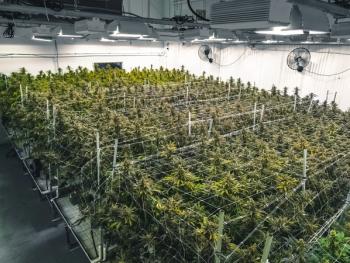

What are current good manufacturing practices (cGMP) certification and why get it? It takes a lot of time, it’s hard work, and can be expensive to become cGMP certified, so why be interested in something that isn’t yet required?
Delta-8 and delta-10 have gained considerable traction over the past year. Although these cannabinoid isomers fall in an extreme grey area, consumers are driving up demand. They can be purchased in many different forms and are commonly found in vaping products, gummies, and tinctures. Since these isomers are commonly derived from hemp extract, many consumers see delta-8 and delta-10 as a lawful hemp-derived good that provides a psychoactive effect. Per a new stance from the federal government, vaping products with these isomers fall under the 2018 Farm Bill. Even with the Food and Drug Administration’s (FDA) stance regarding the 2018 Farm Bill exempting hemp from the Controlled Substances Act (CSA), the popular edible cannabinoid isomers are not automatically legal.
Medical Cannabis Is Here and It’s Here to Stay: How Americans for Safe Access, the Nation’s Largest Member-Based Cannabis Advocacy Organization, Protects Patient Rights

What are current good manufacturing practices (cGMP) certification and why get it? It takes a lot of time, it’s hard work, and can be expensive to become cGMP certified, so why be interested in something that isn’t yet required?

Let’s check back in with some of our top authors over the years to get their insight on how their articles resonated with readers and where the cannabis industry is headed.

Terpenes can be tricky. Although cannabis is heavily regulated, since cannabis-derived terpenes do not contain tetrahydrocannabinol (THC) and other cannabinoids, they are not regulated in the same way that cannabis is.

What is mycology and why is it important to the cannabis industry?

An overview of the changes needed to increase standards and regulations in the cannabis industry and why they are so important.

Regulations and compliance are sometimes deemed a necessary evil, but consumer and employee safety are at the heart of those rules. The cannabis industry faces unique challenges when it comes to compliance because each state has their own rules. Federal regulation would certainly simplify matters, but until then Kim Stuck, CEO and founder of Allay Consulting, offers some practical advice for how to stay ahead of potential issues. Here, Stuck shares her background in regulatory work, the cannabis industry, her new blog coming out in Cannabis Science and Technology next month, and more.

How does the pharmaceutical industry test better to avoid mislabeling problems?

This article explores five common cannabis tests and the benefits of incorporating filter plates.

This study offers guidance to establishing meaningful quality standards for the commercialization of cannabis and cannabis-related products.

The COVID-19 pandemic affected all types of businesses, such as those found in the cannabis industry. Though it was hit hard from the virus, the cannabis industry suffered another blow in the form of the December 2020 COVID-19 stimulus package, which included a provision classifying all vape products as cigarettes, subjecting them to the same regulations as cigarettes. Here, U.S. Navy veteran Dana E. Shoched, president and chief executive officer of O2VAPE, discusses the impacts this legislation may have on the cannabis vaping industry.

This column discusses where the USDA went wrong in their final rule regarding hemp and how the author thinks it can be fixed.

A review of the general state standard quality control checkpoints and how companies can go above and beyond by applying federal requirements to their businesses.

Gretchen Schmidt, Faculty Program Director Criminal Justice Programs & Cannabis Control at Excelsior College, discusses the graduate certificate program offered at her college.

A discussion on how extractors need to monitor the chemical processes they perform.

How will the need for increased testing impact extractors?

This article intends to clarify the main goals of GACP and GMP guidelines, identify differences between the two, and also explore why it is important, when operating within the medicinal cannabis sector, that these two guidelines are complied with and their standards achieved.

What does FDA oversight mean for cannabis businesses and the industry as a whole?

This article discusses the difficulties of reining in the intense energy use of the cannabis industry from the perspective of the most energy efficient state: Massachusetts.

Highlights of the challenges facing the cannabis extracts industry and discussion about the need for standardized methods and the role of laboratory accreditation.

An argument for moving away from traditional culture-based methods and towards employing methods with increased specificity and accuracy.

The U.S. Food and Drug Administration (FDA) recently released a draft guidance on developing cannabis-based drugs. These guidelines come weeks after the White House announced it had completed reviewing the draft guidance.

Here we examine the history of cannabis in the US, the role the USP played in that field, and the new role the USP is taking with cannabis for medical use.

In this article, you will learn about the GxP requirements for laboratories, production facilities, and distribution of cannabis.

The industry needs to address energy efficiency, plastic use, and wastewater to build a long-term reputation of accessibility, legitimacy, and sustainability.

The U.S. Department of Agriculture (USDA) recently issued a temporary delay regarding enforcement on two provisions of its hemp regulations (1).