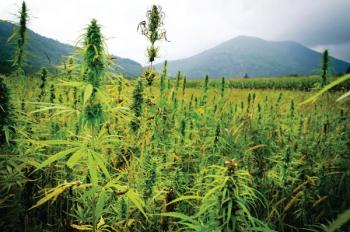


The report compiled national data on hemp acreage, yield, production, and price comparing 2023 and 2024 reports.

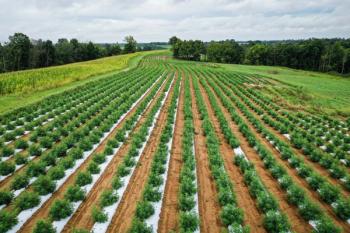
The report compiled national data on hemp acreage, yield, production, and price comparing 2023 and 2024 reports.

Maryland Governor Wes Moore recently signed legistlation into law that mandates state officials to automatically shield past and low-level cannabis convictions from public view.

North Dakota Governor Kelly Armstrong recently signed legislation enabling patients to purchase cannabis-infused products.

D4DPR announced in a recent press release that the organization was dropping their legal challenge over how the DEA handled the federal cannabis rescheduling hearing but had won a disclosure showing that the DEA had communicated with several applications prior to formal selections being made.

With a focus on consumer safety, Missouri lawmakers recently passed bills regulating hemp-derived THC products.

Metrc recently announced that they signed a new government contract with the US Virgin Islands for their new track-and-trace platform.

In late January 2025 the survey will be sent to hemp producers in six states.

The U.S. Senate Committee on Agriculture, Nutrition, & Forestry has introduced the Rural Prosperity and Food Security Act, which will serve as the Senate’s draft for the 2024 Farm Bill.

On November 5, 2024, Floridians will decide on Amendment 3, which proposes legalizing recreational cannabis. Former President Trump has stated support for this measure, aligning with his stance on state-level cannabis policies.

The report says that Illinois added 82 licensed dispensaries, the largest expansion of dispensaries since the program’s start in 2014.

The U.S. Hemp Roundtable submitted comments to California’s Office of Administrative Law (OAL) on September 16th, urging the agency to overrule emergency regulations proposed by Governor Gavin Newsom and the California Department of Public Health (CDPH).

The Attorney General's office says that non-alcoholic beverages with hemp-derived tetrahydrocannabinol (THC) with concentrations of delta-9 THC of no more than 0.3% are legal in South Carolina, assuming you can verify they meet this threshold.

The latest webinar in this series explored challenges and solutions in the current and future landscape of cannabis policies and regulation.

Missouri’s Department of Health and Senior Services is on track to “embargo and condemn” products that contain intoxicating cannabinoids starting September 1, 2024 in accordance to an executive order signed by the state’s governor, Michael L. Parsons.

A recently added amendment to the 2024 Farm Bill would significantly impact intoxicating hemp-derived products.

Focusing on the potential effects for medical cannabis patients, Americans for Safe Access held a high-level presentation and discussion on the rescheduling of cannabis.

The US Attorney General has initiated the process to reclassify cannabis from a Schedule I to a less-restrictive Schedule III substance.

The commission appointed to study a state-run cannabis model concluded its final meeting without issuing recommendations on legislation.

On Wednesday, August 30th, the Department of Health and Human Services made its recommendation to the Drug Enforcement Agency to classify cannabis as a Schedule III drug, paving the way for reform, industry expansion, and research opportunities.

The recently approved legislation creates new opportunities for possession and cultivation.

Several agencies are reportedly working together to review the scheduling of cannabis, with a final decision anticipated to come later this year.

The New Jersey Business Action Center (NJBCA) recently announced Tauhid Chappell as the first Executive Director of its Cannabis Training Academy (CTA).

If passed, possession of psilocybin would be legal in certain circumstances in the state.

Sponsored by 17 state lawmakers, House resolution 420 called on federal officials to reschedule cannabis at the federal level.

After the most recent cannabis legalization bill failed to pass the Senate, Governor Sununu issued a statement explaining how legalization could occur instead.