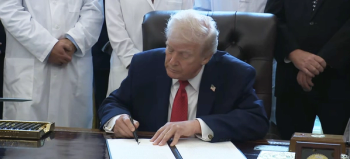
President Trump signed an executive order directing federal agencies to reclassify cannabis from Schedule I to Schedule III controlled substances.
A recent study found that medical cannabis may play a role in decreasing opioid use.
A recently published study in JAMA Internal Medicine, involving the New York State (NYS) Medical Cannabis Program reported on adults with chronic pain who participated in the program (1). The study was conducted by researchers from Albert Einstein College of Medicine (Bronx, New York) and Montefiore Health System.
According to the press release (1), 204 adults participated in the study, who had been prescribed opioids for chronic pain and had also recently been certified for medical cannabis between the period of September 208 and July 2023. During the study, patients were monitored for 18 months, with data being collected on both the patients’ cannabis and opioid use that was collected via the New York State Monitoring Program.
Participants in the study disclosed that at the beginning, they were experiencing high levels of pain and were consuming an average daily opioid dose that is equivalent to 73.3 mg of morphine. During the 18 month study timeline, the average daily dose was able to decease to 57 mg which was a 22% reduction (1).
Participants that received a 30-day supply of medical cannabis used the equivalent of 3.5 mg less of morphine per day than those who were not provided cannabis during the same month.
"Those changes may seem small, but gradual reductions in opioid use are safer and more sustainable for people managing chronic pain than stopping suddenly," Dr. Slawek noted.
“This research adds to the growing body of evidence supporting a medicalized model of cannabis use, where pharmacists are actively involved in dispensaries and cannabis is treated like other prescription drugs,” said Julia Arnsten, M.D., M.P.H., the study's senior author, chief of the division of general internal medicine at Montefiore Einstein, and professor of medicine, of epidemiology & population health, and of psychiatry and behavioral sciences. “We hope these findings will lead to new policies encouraging the effective management of chronic pain through the use of regulated substances.”
In February 2025, the OCM began its investigation after receiving a referral to the OCM Trade Practices Bureau (TPB) from the Compliance team (3). The investigation included reviewing audit and inspection records, reviewing Omnium and the unlicensed businesses’ contracts and audits, and collecting witness testimony. The OCM press release included photos of products and isolate allegedly involved in the operation.
On October 20, 2025, the Office of Cannabis Management (OCM) issued a Notice of Pleading (NOP) to Omnium Canna, due to
According to the press release (3), the
“New York’s Cannabis market holds enormous potential. It creates jobs, generates revenue and builds prosperity in communities that were left out of the economic mainstream for decades. Realizing that potential requires strong leadership, a deep understanding of the regulatory framework, and a steadfast commitment to the people of this state,” Hochul said in a statement to The Capitol Pressroom (2).
“Too often, the Office of Cannabis Management has stood in the way of the market realizing its potential, including most recently in the case of a pending compliance action that it has had to withdraw,” she said. “As a result, I directed my office to take action, including requesting the resignation of the Acting Executive Director. That resignation has been accepted and is effective immediately.”
Filling the shoes of OCM Executive Director will be OCM Chief Administrative Officer, Susan Filburn.Other personnel changes in the state organization include the resignation of James Rogers, Director, Trade Practices Bureau and Deputy Counsel (2). Before Reid took over as acting Executive Director, Chris Alexander had served as the first Executive Director and helped drive the adult-use cannabis movement in the Big Apple State.
“My administration remains committed to fostering the cannabis market for consumers, business owners and impacted communities across New York State. We will work expeditiously to restore accountability, transparency and confidence in OCM,” Hochul added (2).
References