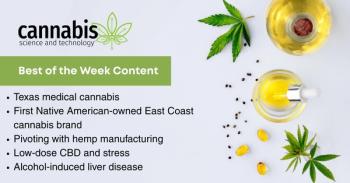
Let’s dive into the top stories shaping the conversation this week. Summaries of each article are listed below.
By request of New York Governor Kathy Hochul, New York State Office of Cannabis Managements’ (OCM) acting Executive Director Felicia A.B. Reid, forcibly resigned from her position. The resignation follows after enforcement challenges of the Omnium case which has since been withdrawn.
Filling the shoes of OCM Executive Director will be OCM Chief Administrative Officer, Susan Filburn. Other personnel changes in the state organization include the resignation of James Rogers, Director, Trade Practices Bureau and Deputy Counsel.
Researchers at the University of Illinois Urbana-Champaign (Champaign County, Illinois), are conducting the first-of-its-kind US field trial which is investigating how Class A biosolids can be utilized as a sustainable fertilizer for the production of industrial hemp grain and fiber. The university is working in partnership with Flura, Inc. and The Metropolitan Water Reclamation District of Greater Chicago. The research initiative is called “Evaluating Environmental Benefits of Growing Hemp with Biosolids”.
The key focus areas of the trial include:
- Fertilizer efficacy and fiber/grain yield comparisons
- Carbon sequestration potential through root biomass measurement
- PFAS absorption monitoring across different plant tissues
- Overall hemp remediation potential
On December 9, 2025, the Ohio Senate offered their final approval on Senate Bill 56 (SB 56). The bill will be heading to Ohio Governor Mike DeWine’s desk for his signature.
Once SB 56 is signed into law, the bill will criminalize cannabis products that have been purchased from out-of-state, this will also consist of products that were legally acquired at licensed dispensaries.
Senate Bill 56 would limit the sale of some hemp-derived products so that they can only be purchased from state-licensed dispensaries, establish a path for individuals who are interested in expunging prior cannabis-related convictions, specify that adults can consume cannabis legally within their private property, as well as redirect a portion of tax revenues stemming from cannabis transactions that would go to individual municipalities that license cannabis retailers.
A report from the Congressional Research Service (CRS) explains that, though the legislation redefining hemp has passed, it remains unclear if the enforcement of the new definition will be feasible once effective. The report, Change to Federal Definition of Hemp and Implications for Federal Enforcement, explains the content of recent legislation, the status of hemp before and after the 2018 Farm Bill, and the implications for the new policy.
“While the change to the hemp definition will seemingly alter the legal status of many hemp products currently available on the market, it remains unclear if and how federal law enforcement will enforce the new prohibitions when the new definition goes into effect,” the CRS report states. “It also remains to be seen whether FDA will pursue additional options to remove these items from the market. Both FDA and DEA may lack the resources to broadly enforce the laws prohibiting intoxicating hemp products on the market.”
Noting the rise in CBD use for dogs for health and behavior reasons, researchers in a recently published study stated the need for further investigation into the long-term effects of the cannabinoid. The study, “Demographic features, health status, and behavioral changes associated with cannabidiol use in the Dog Aging Project,” was published in Frontiers in Veterinary Science in November 2025.
The use of CBD seemed to reflect the broader societal beliefs in CBD and cannabis, they stated. They also noted the potential use of CBD in dog training, due to the decline seen in intensity of aggressive behaviors.
“Further studies are needed to advance our understanding of this novel supplement at the mechanistic, clinical, and population levels,” they concluded. “This will benefit the health of humans and dogs alike.”