
The 2025 YouGov survey data from more than 31,000 US adults show significant support for recreational cannabis legalization, medical use, and federal reclassification.
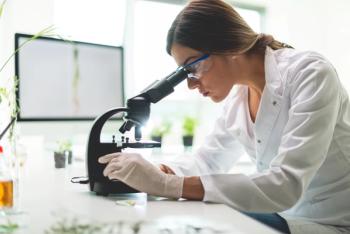
NMU and SSI collaborated to establish the Shimadzu Analytical Core Laboratory for Medicinal Plant Sciences for NMU’s undergraduate degree program in medicinal plant chemistry.
NMU and SSI collaborated to establish the Shimadzu Analytical Core Laboratory for Medicinal Plant Sciences for NMU’s undergraduate degree program in medicinal plant chemistry.
A couple years ago, Northern Michigan University (NMU) established the first undergraduate degree program in
“Having access to the same top-caliber equipment used in the industry gives our students a real advantage heading into their careers,” said Fritz Erickson, president of NMU.
As part of the Shimadzu Partnership for Academics, Research and Quality of Life (SPARQ) program, SSI gave an in-kind donation of instrumentation for the laboratory and a framework for research collaborations and internships. The Shimadzu instruments include multiple mass spectrometers, gas and liquid chromatography (GC-MS and LC-MS/MS), and inductively coupled plasma (ICP-MS). These instruments perform cannabis and hemp potency testing, terpene profiling, and contaminate testing for pesticides, residual solvents, heavy metals, and mycotoxins/aflatoxins.
“The serious education and research on medicinal plants undertaken in this unique undergraduate program will help to overturn the misinformation and stigma associated with hemp and cannabis as it applies to human and environmental health,” said Scott Kuzdzal, vice president of marketing, SSI. “NMU students in the medicinal plant chemistry program now have access to the same level and quality of analytical instrumentation that they will encounter after graduation in commercial, academic, and medical research labs.”
Original Source: